Home > discover Oman > deserts
Deserts in Oman
The Silence of the Sands
Vast, golden, and endlessly shifting, the deserts of Oman form the spiritual core of the nation’s landscape. Here, silence speaks, and the wind carves poetry into dunes that have watched caravans, stars, and centuries pass. The deserts of Oman stretch across the heart of the Arabian Peninsula — vast, untamed landscapes where time slows and the soul of the land speaks. Each region carries its own character: from dunes of gold to salt plains, from Bedouin tents to fossil seas.
Wahiba Sands (Sharqiya Sands)
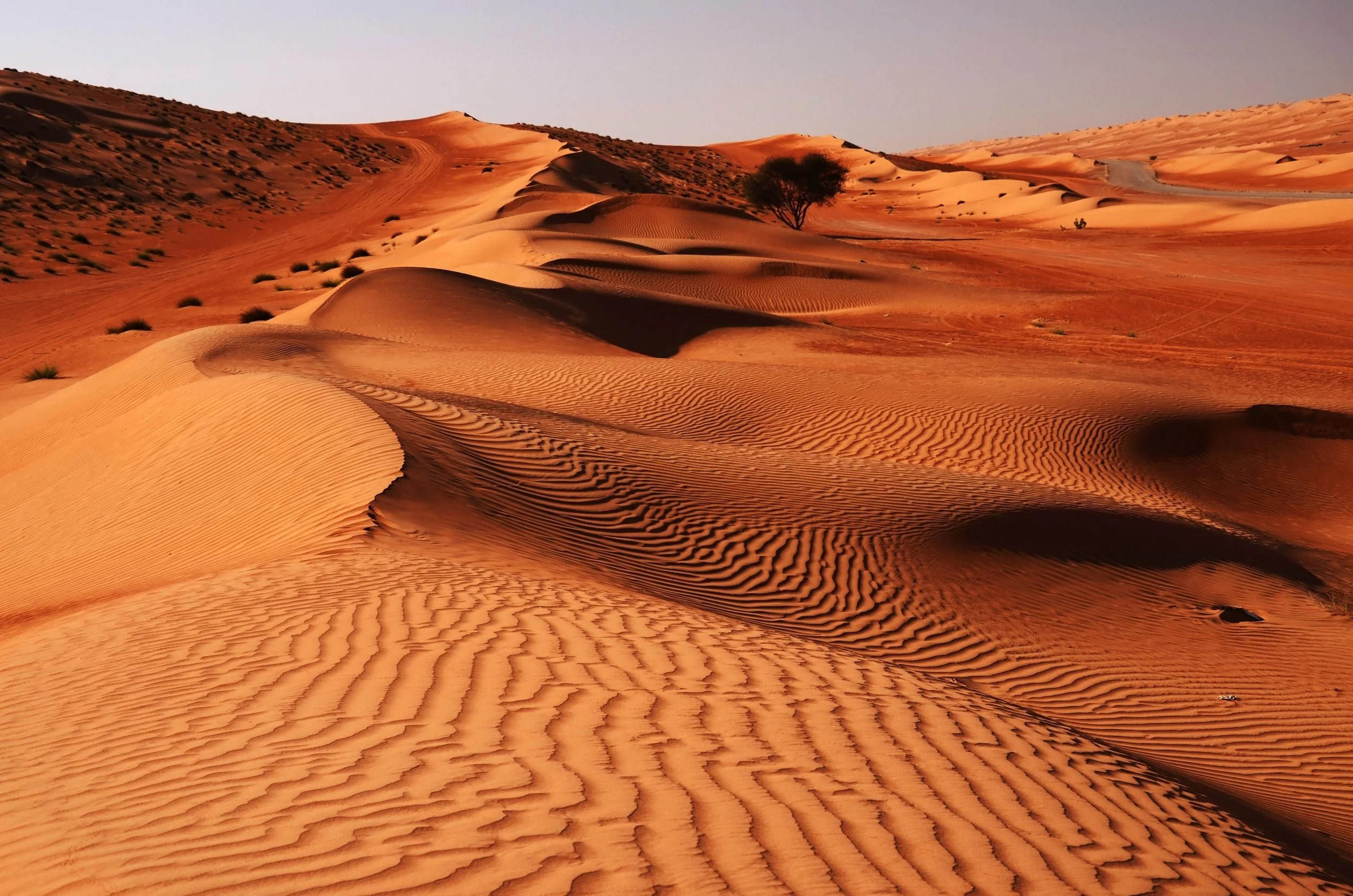
In the east, the Wahiba Sands ripple in shades of amber and rose, their curves sculpted daily by the desert wind. Stretching from the Eastern Hajar Mountains to the Arabian Sea, this desert covers more than 12,000 square kilometers.
It is home to Bedouin families who have lived among its dunes for generations, herding camels and weaving tales by the firelight. Visitors can explore the desert’s living heritage, ride across golden ridges, discover hidden oases, and sleep beneath skies scattered with stars.
At dawn, the dunes glow like embers; at night, silence becomes music.
Rub’ al Khali (The Empty Quarter)
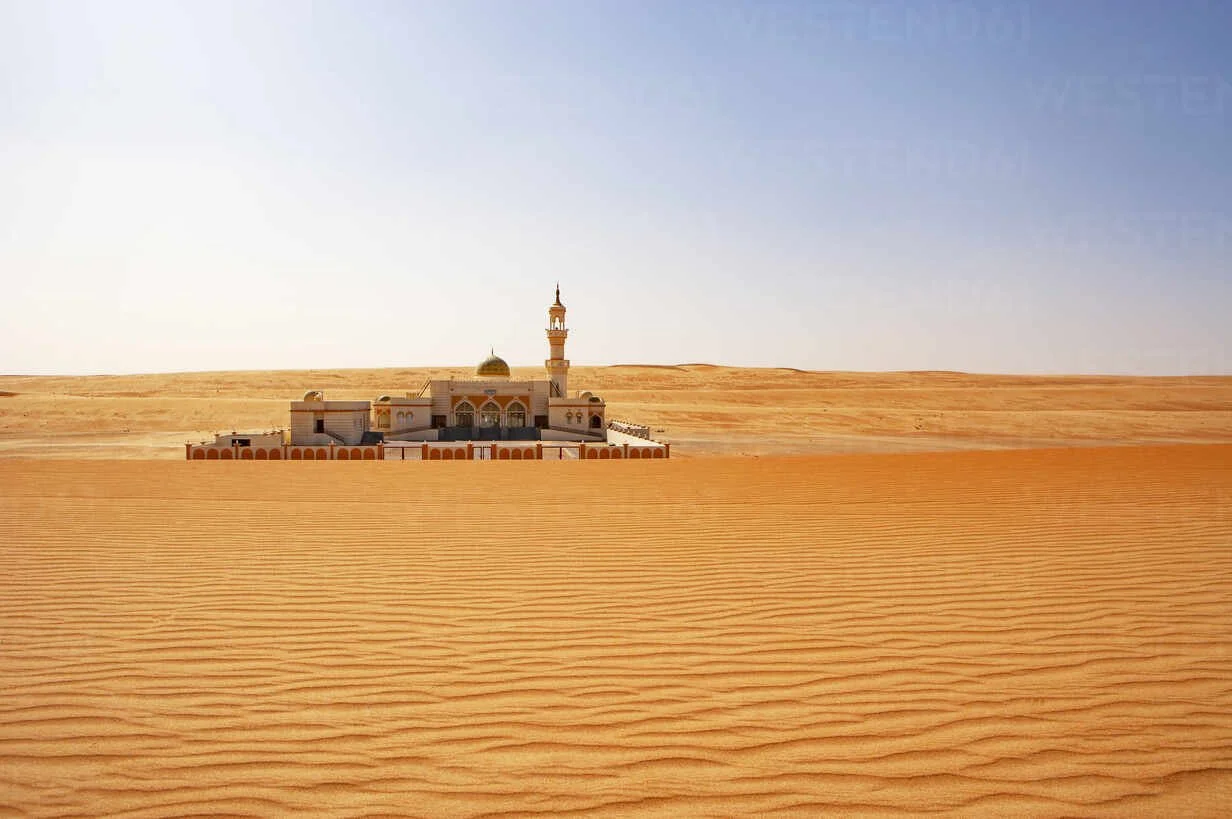
To the south lies the Rub’ al Khali, the legendary “Empty Quarter,” a sea of sand that spans four nations. In Oman, it stretches across the Dhofar and Al Wusta regions, a realm of immense solitude and boundless dunes.
Its landscapes are alive with paradox: desolate yet full of beauty, silent yet resonant with memory. For centuries, only the most resilient have ventured here, explorers, nomads, and traders following the faint tracks of stars.
The desert’s colors shift from ivory to bronze under the sun, and mirages shimmer like dreams at the horizon.
Al Huqf Desert, the geological wonder
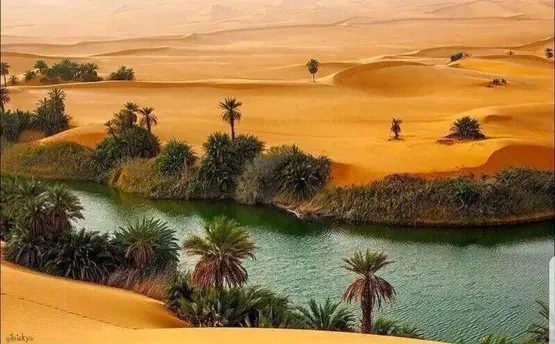
Between Duqm and Haima lies the Al Huqf Desert, a lesser-known but mesmerizing landscape. Its terrain differs from the rolling dunes, a mosaic of rocky plains, gypsum formations, and salt flats.
This is a land of ancient fossils, where remnants of prehistoric life lie beneath the surface, silent witnesses to a time when Oman was submerged beneath a tropical sea.
Scientists come here to study geology; travelers come to feel the quiet pulse of Earth’s ancient heart. The sunsets of Al Huqf burn crimson over white stone, a vision of contrast and calm.

Al Khaluf Desert and the Sugar Dunes
South of Al Khaluf, where desert meets the sea, lie the Sugar Dunes, so called for their pure, white sand that glows like silk under the sun. Here, wind-carved ridges fall gently into turquoise waters, creating one of Oman’s most surreal natural spectacles.
Few places in the world hold such harmony, where ocean and desert embrace. The air smells of salt and stillness, and the only sounds are waves whispering against the sand. It is a landscape for contemplation, photography, and wonder.

Spirit of the Sands
Each desert in Oman is more than geography, it is heritage, resilience, and reflection. The Bedouins who dwell within them live in harmony with the harsh beauty of nature, guided by stars and sustained by hospitality. In their world, every grain of sand holds memory and meaning.
Each of Oman’s deserts carries its own voice, Wahiba’s warmth, Rub’ al Khali’s vastness, Al Huqf’s mystery, and Khaluf’s serenity. Together they form a spiritual geography: places where man learns humility and finds peace in the rhythm of the earth.
✨ In the deserts of Oman, silence is not emptiness — it is the breath of eternity across the sands of time.
✨ In the deserts of Oman, the earth breathes softly beneath the sky’s eternal light — a timeless meeting of silence, sand, and soul.

OMAN DESERT ADVENTURE | QUICK REFERENCE CARD
🚗 DRIVING & NAVIGATION (The Golden Sands)
HARDWARE: 4x4 is mandatory. Engines like the Toyota Prado or Land Cruiser are the standard.
TIRE PRESSURE: Deflate to 15–20 psi before entering the dunes. Shops in Bidiya or Al Wasil do this for 1 OMR.
MOMENTUM: Keep a steady speed. Never brake suddenly on a slope—this is how vehicles get "beached" in the sand.
TEAMWORK: Never drive into the deep desert with only one car. A second vehicle for "Recovery" is your best safety insurance.
NAV: Download offline maps (Gaia or Google). Sand dunes look identical after 20 minutes; visual markers are unreliable.
⛺ CAMPING & SURVIVAL (The Quiet Night)
LOCATION: Camp on high, solid ground or in a "White Valley." Avoid camping in low-lying wadis or near heavy vegetation.
BIOLOGY: Scorpions and spiders often live near desert shrubs. Do not walk barefoot or in sandals after sunset.
THERMAL GAP: Daytime heat is intense, but nights drop to 10–15°C. Pack a heavy sweater and a high-quality sleeping bag.
WATER: 5 Liters per person, per day. Dehydration happens faster in dry desert air than in the humid coast.
ZERO TRACE: The desert is a fragile ecosystem. Pack out every scrap of trash. Wind can uncover buried waste years later.
🤝 CULTURAL ETIQUETTE
BEDOUIN PRIVACY: If you see a Bedouin camp, keep a respectful distance. If approached, Omani hospitality (dates and coffee) is the standard—be polite and gracious.
MODESTY: Even in the remote dunes, keep shoulders and knees covered if you visit local camps or villages on the desert edge.